Bedroom & living room
Bedroom and Living Room Makeover: A Beginner’s Renovation Guide
Refresh a bedroom or living room yourself: walls, paint colors, accent walls, flooring, lighting and storage — the easiest rooms for a first DIY renovation.
- Difficulty
- Beginner
- Time
- 1–2 weeks
Bedrooms and living rooms are "dry" rooms with no plumbing and simple wiring — which makes them the perfect place to learn. Nearly everything here is DIY-friendly.
Step 1: Walls
Start by repairing: fill cracks and holes (how to patch drywall), skim coat rough areas, sand and prime. Then choose a finish:
- Paint — the fastest transformation. Eggshell or matte for bedrooms, washable matte or satin for living rooms with kids and pets.
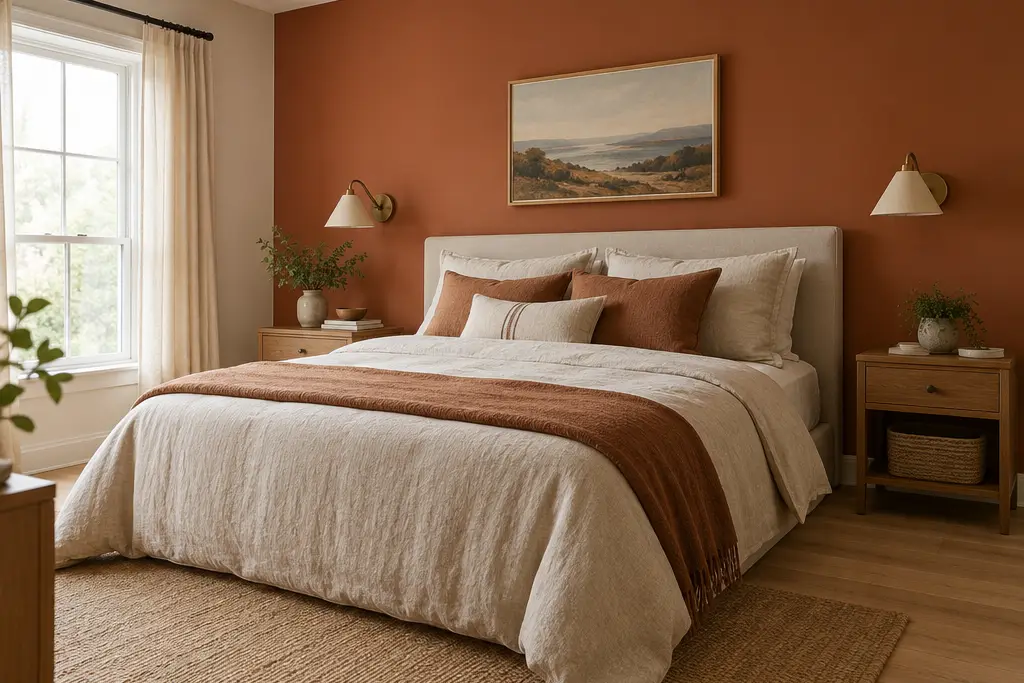
- Accent wall — a deeper color, wallpaper or wood slats behind the bed or sofa. One wall is a manageable first project.
- Wallpaper — modern non-woven papers are beginner-friendly; read wallpaper mistakes first.
- Paneling or picture-frame molding — adds character with MDF strips, adhesive and paint.
Step 2: Choose colors that work
- Test samples on at least two walls and look at them in morning and evening light.
- North-facing rooms feel cooler — warm whites, beiges and terracottas help. South-facing rooms can take cool greys and greens.
- Use the 60/30/10 rule: 60% main color (walls), 30% secondary (furniture, textiles), 10% accent.
- Paint the ceiling a lighter tint of the wall color or clean white to make the room feel taller.
Step 3: Floors
Laminate and vinyl plank are the most popular DIY floors — click-lock systems, no glue, a room in a weekend. Compare them in laminate vs vinyl plank and follow our installation guide. In bedrooms, a quality underlayment makes a big difference to footstep noise.
Step 4: Lighting in layers
Most rooms are over-lit from a single ceiling fixture. Add layers: ambient (ceiling), task (reading lamps, sconces) and accent (LED strips on shelves, picture lights). Plug-in sconces avoid new wiring. Warm white bulbs (2700–3000K) create a cozy feel.
Step 5: Storage and built-ins
- Floating shelves — our step-by-step guide.
- Built-in look from flat-pack wardrobes: add filler panels and crown molding to the ceiling, paint to match the walls.
- Media wall with hidden cables — plan an outlet behind the TV (ask an electrician) or use a recessed cable kit.
Step 6: Finishing touches
New switch plates, door handles, curtains hung high and wide, and a rug big enough for at least the front legs of furniture to sit on. For bedrooms, a DIY upholstered headboard is a weekend project with a big payoff.
| Order | Job |
|---|---|
| 1 | Empty room, remove old flooring and trim |
| 2 | Electrical changes (if any, by pro) |
| 3 | Wall repairs, skim, prime |
| 4 | Paint ceiling, then walls / wallpaper |
| 5 | Flooring |
| 6 | Baseboards, doors, fixtures, decor |
Keep reading
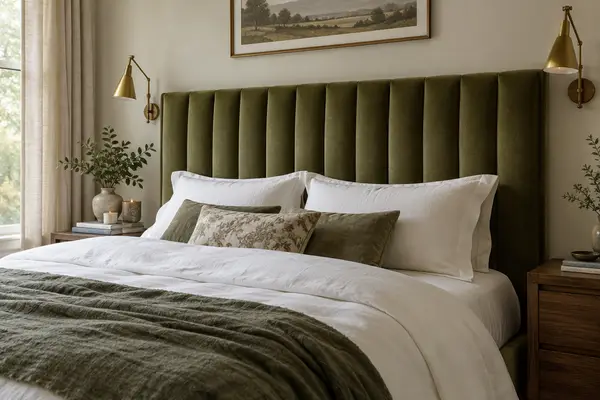
DIY upholstered headboard
Plywood, foam and velvet — build a padded headboard and hang it on a French cleat.
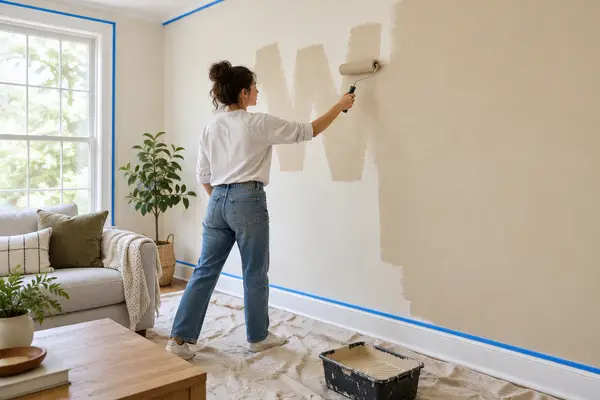
How to paint a room like a pro
Prep, cut in, roll, repeat — the full method for crisp lines and no streaks.
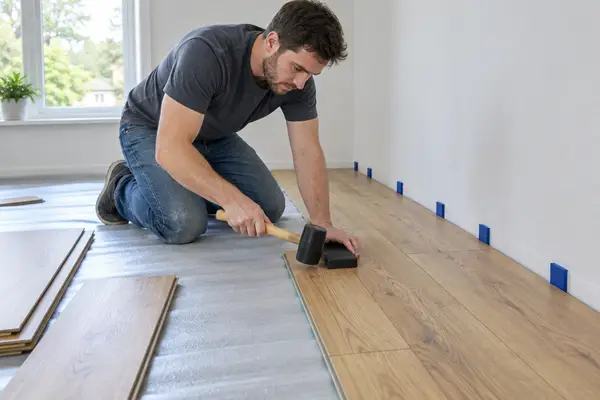
How to install laminate flooring
Subfloor prep, layout, expansion gaps and neat cuts around doors — step by step.