Mistakes
20 Common Renovation Mistakes Beginners Make (and How to Avoid Them)
The 20 renovation mistakes beginners make most often — from skipping primer to wrong order of work and no contingency budget — and simple ways to avoid each one.
- Difficulty
- Beginner
Every experienced DIYer has a list of lessons learned the hard way. Here is ours, so you can skip straight to good results.
Planning mistakes
- No plan, just enthusiasm. Demolition is fun; living in a half-finished room for six months isn't. Write the plan and the order of work first.
- No contingency budget. Keep 10–25% aside. Something will surprise you.
- Wrong order of work. New floor before painting the ceiling, tiling before moving an outlet… Dirty and hidden work goes first.
- Measuring once. Measure twice, write it down, and sketch the room with dimensions.
- Buying the exact amount of material. Tile, flooring and wallpaper need 7–15% extra, from the same batch.
- Ignoring permits. Unpermitted electrical or structural work can cause problems with insurance and when selling.
- Underestimating time. Double your estimate, then add drying days.
Preparation mistakes
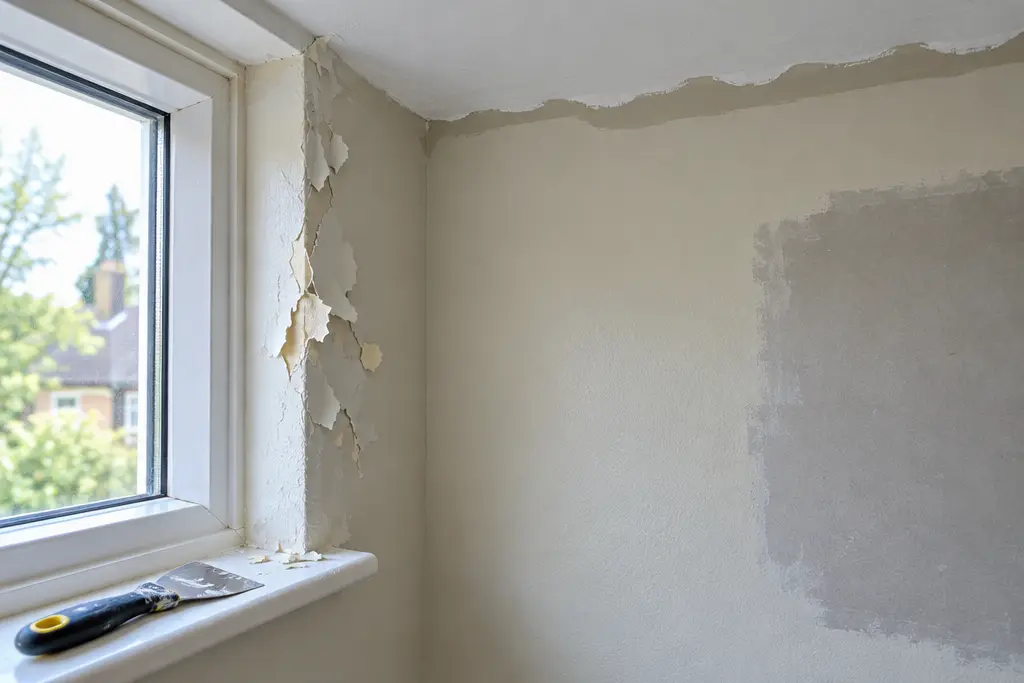
- Skipping surface prep. 70% of a good paint job is cleaning, filling, sanding and priming.
- Not priming patches and new drywall. The result is blotchy "flashing".
- Tiling or flooring over an uneven surface. Check with a long straightedge; fix dips and humps first.
- Not letting materials acclimatize. Laminate and wood flooring should sit in the room for 48 hours.
- No dust control. Seal doorways with plastic and tape, cover vents, and use a vacuum on your sander.
Technique mistakes
- Cheap brushes and rollers. They shed and leave streaks. Good tools are worth it.
- Overloading the roller and painting too thin. See painting mistakes.
- No expansion gap on floating floors. Laminate needs a gap at every wall or it buckles.
- Too much grout left on tile. Wipe haze within the time on the bag or it sets like cement.
- Using silicone where you need caulk, or vice versa. Silicone for wet areas (tubs, sinks), paintable acrylic caulk for trim.
- Wallpaper with unmatched batches. See wallpaper mistakes.
Safety mistakes
- Trusting a switch instead of a tester. Turn off the breaker, then test with a voltage tester every time.
- No eye, lung or ear protection. Dust from sanding and old materials is harmful; in older homes, test for lead paint and asbestos before sanding or demolition. Read our safety basics.
The golden rule: when a step says "let dry for 24 hours", it means 24 hours. Rushing is the biggest hidden mistake of all.
Keep reading
Beginner
12 painting mistakes and how to fix them
Roller marks, bleeding tape lines and blotchy patches — causes and fixes.
Beginner–Intermediate
10 wallpaper mistakes to avoid
Bubbles, gaps, peeling seams and crooked patterns — and how to prevent them.
Beginner
How to plan a renovation (and the right order of work)
Set the budget, then follow the order pros use: demolition, rough work, walls, ceiling, floors, finishes.