Mistakes
12 Painting Mistakes That Ruin a Paint Job (and Easy Fixes)
Roller marks, bleeding tape lines, flashing patches, peeling paint — the most common interior painting mistakes and how to avoid or fix each one.
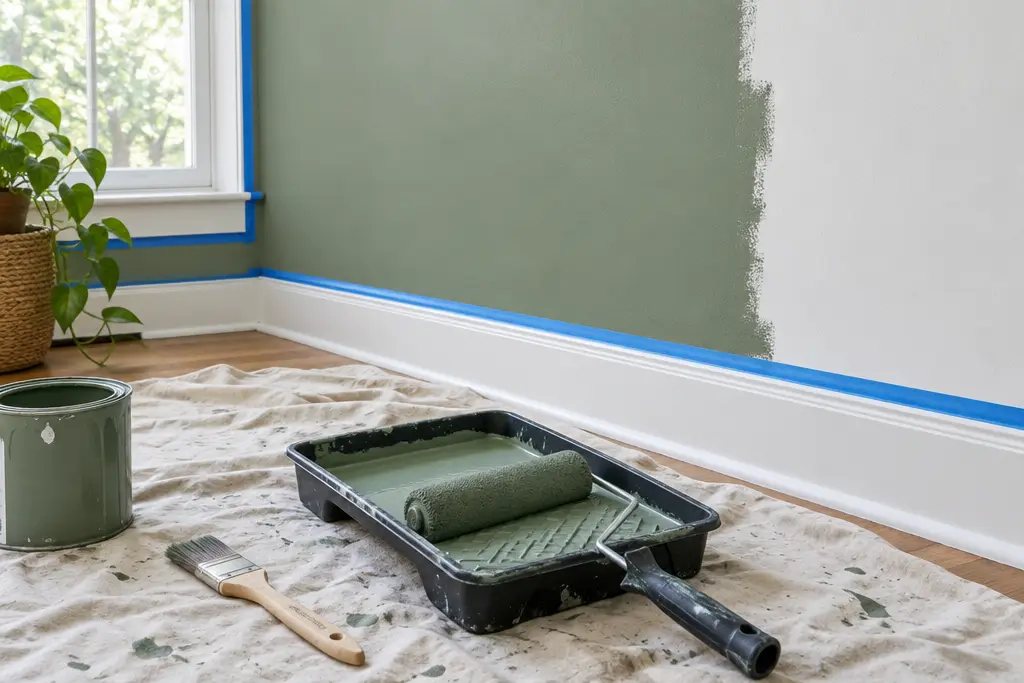
- Difficulty
- Beginner
Painting is the most popular DIY job — and the one where small shortcuts show the most. Here are the mistakes we see most often.
1. Skipping cleaning
Kitchen walls and hallways carry grease and hand marks that stop paint sticking. Wash with a mild degreaser, rinse, let dry.
2. Not priming patches
Fresh filler absorbs paint differently and shows as dull spots ("flashing"). Spot-prime every patch.
3. Painting over glossy paint without sanding
Scuff-sand gloss with 180–220 grit or use a bonding primer, or the new paint will peel.
4. Cheap rollers
Use a quality roller cover: short nap (3/8 in / 10 mm) for smooth walls, longer nap for textured surfaces. Remove loose fibers with tape before starting.
5. Too little paint on the roller
"Dry rolling" to stretch the paint causes patchy coverage. Load the roller fully, then roll off excess on the tray ramp.
6. Not keeping a wet edge
Lap marks happen when you roll over paint that has started drying. Work in sections from ceiling to floor and always roll back into wet paint.
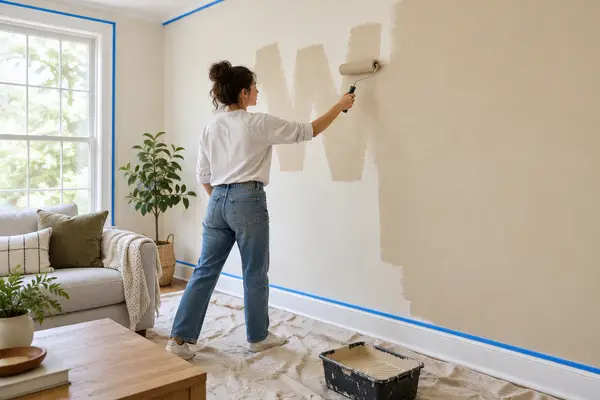
7. Wrong roller technique
Roll a large "W" or "N" about 3 ft (1 m) wide, fill it in without lifting, then finish with light, parallel strokes top to bottom.
8. Tape pulled too late (or pressed too little)
Press tape edges firmly with a putty knife. For crisp lines, seal the edge with a thin coat of the base color, then paint. Remove the tape while the last coat is still slightly wet, pulling at a 45° angle.
9. One coat only
Even "one coat" paints usually need two for an even color, especially going from dark to light.
10. Painting in the wrong conditions
Too cold, too humid or direct sun causes poor drying and marks. Aim for 50–85°F (10–30°C) with ventilation.
11. Wrong sheen
Flat/matte hides flaws but marks easily; eggshell or satin for living areas; semi-gloss for trim, doors and bathrooms.
12. Not boxing the paint
Pour all cans of the same color into one bucket and mix ("boxing") for a perfectly consistent color across the room.
Keep reading
How to paint a room like a pro
Prep, cut in, roll, repeat — the full method for crisp lines and no streaks.
Paint calculator
Gallons or liters of paint for walls and ceiling, including doors, windows and coats.
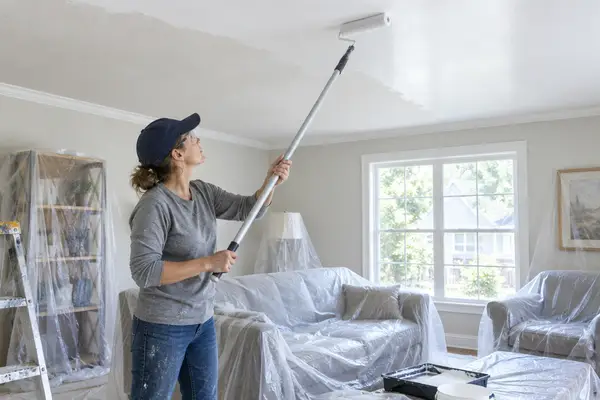
How to paint a ceiling (plus stretch & drywall options)
The right paint, the right roller direction, and alternatives: stretch and drywall ceilings.