Ceilings
How to Paint a Ceiling Without Streaks or a Sore Neck
Paint a ceiling the easy way: the right paint and roller, cutting in, rolling toward the light, avoiding lap marks — plus when to choose stretch or drywall ceilings.
- Difficulty
- Beginner
- Time
- ½–1 day
- Cost
- Low
Ceilings are the part of a room everyone forgets until they're yellowed, stained or cracked. A fresh coat brightens the entire room — and with the right technique it's easier than it looks.
What you need
- Flat ceiling paint (flat hides imperfections; some ceiling paints go on tinted and dry white)
- Stain-blocking primer for water marks
- Roller with 3/8–1/2 in (10–12 mm) nap and an extension pole
- Angled brush, step ladder, drop cloths, safety glasses, a cap
Step by step
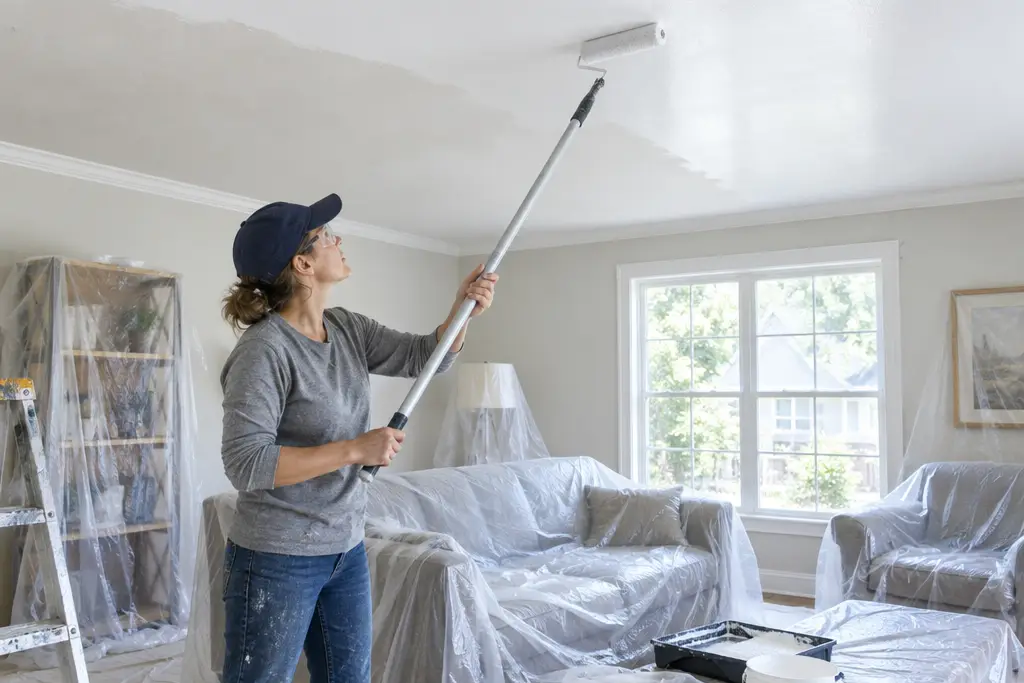
- Clear and cover. Move furniture out or to the center under plastic. Remove or cover light fixtures (power off at the breaker).
- Repair. Fill cracks, sand, and spot-prime water stains with a stain-blocking primer — regular paint lets stains bleed through.
- Cut in around the edges and fixtures with a brush.
- Roll in sections of about 3×3 ft (1×1 m), working parallel to the main window, so the final strokes run toward the light — this hides roller marks.
- Keep a wet edge, overlapping each section while it's still wet.
- Second coat perpendicular to the first for even coverage.
Use an extension pole instead of the ladder wherever possible — it's faster, safer and gives more even pressure. Wear safety glasses: ceiling paint spatters.
Alternatives to painting
| Option | Best for | DIY? |
|---|---|---|
| Paint | Sound ceilings with minor flaws | Yes |
| Skim coat + paint | Rough or patched ceilings | Yes, with practice |
| Drywall (plasterboard) over old ceiling | Badly cracked plaster, hiding wiring, adding recessed lights | Hard — heavy overhead work; rent a drywall lift |
| Stretch ceiling (PVC or fabric membrane) | Very uneven ceilings, fast install, glossy or matte finish | Pro installation — requires special heating equipment |
Textured "popcorn" ceilings installed before the 1990s may contain asbestos. Have them tested before scraping or sanding.
Keep reading
Beginner
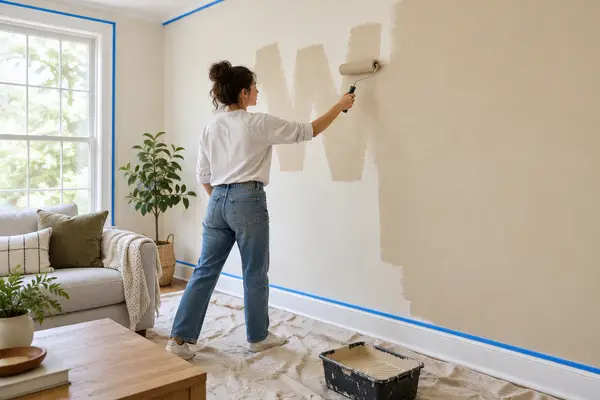
How to paint a room like a pro
Prep, cut in, roll, repeat — the full method for crisp lines and no streaks.
Intermediate
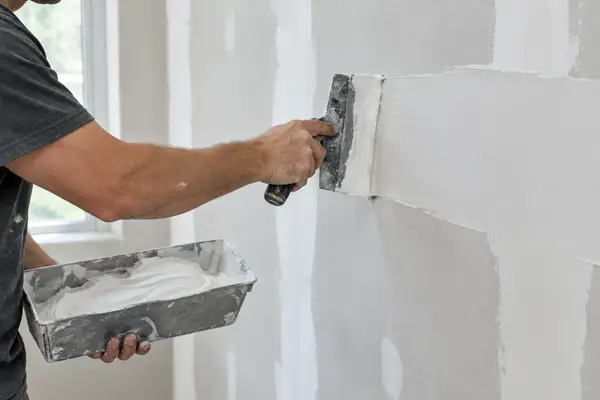
How to skim coat a wall
Turn rough, patchy walls into smooth ones with thin coats of compound.
Beginner
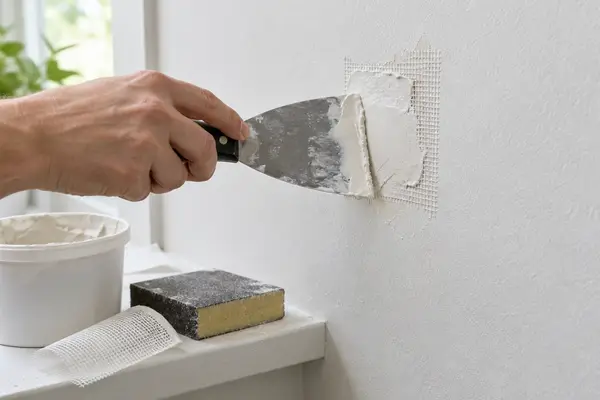
How to patch drywall (small to large holes)
Nail holes, doorknob dents and big holes — three methods and how to make them invisible.