Safety
DIY Renovation Safety Basics: Electricity, Ladders, Dust and Chemicals
The essential safety rules for home renovation beginners: working near electricity, using ladders, controlling dust, lead and asbestos, handling chemicals, and the protective gear you need.
- Difficulty
- Read before you start
Most DIY injuries come from a handful of predictable causes: falls, cuts, eye injuries, electric shock and breathing in dust or fumes. The good news: simple habits prevent almost all of them.
Personal protective equipment
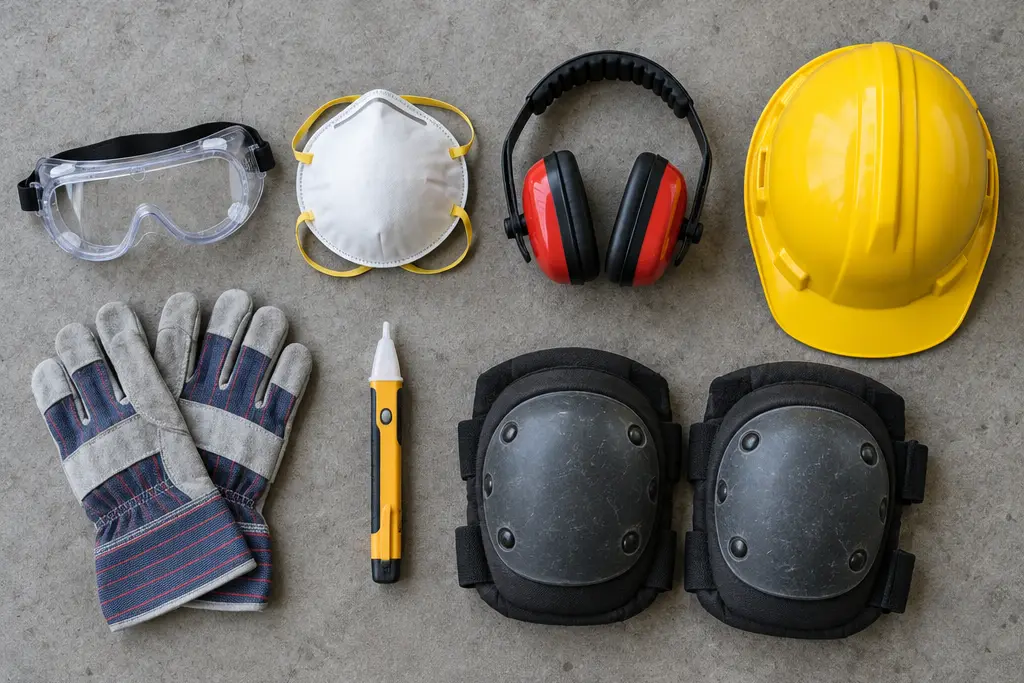
- Safety glasses — any time you drill, cut, hammer, sand, scrape overhead or use chemicals.
- Dust mask / respirator — at least an N95/FFP2 for sanding compound and cutting; a respirator with the right cartridges for solvents and heavy dust.
- Hearing protection — for saws, hammer drills and sanders.
- Gloves — cut-resistant for demolition and glass; nitrile for chemicals, adhesives and grout.
- Knee pads — for flooring and tiling.
- Sturdy closed shoes — demolition sites are full of nails and sharp edges.
Electricity
- Turn off the breaker for the circuit you'll work on, not just the switch. Label it and tell everyone in the house.
- Test before you touch with a non-contact voltage tester; check the tester on a known live outlet first.
- Never work on the main panel, add circuits or work on aluminum wiring as a beginner — that's a job for a licensed electrician.
- Keep water and electrical work apart. Use GFCI/RCD-protected outlets for power tools in bathrooms, kitchens and outdoors.
- Before drilling into walls, scan for wires and avoid the areas directly above and below outlets and switches.
Ladders and working at height
- Inspect the ladder: no bent rails, loose rungs or missing feet.
- Set it on firm, level ground; lock the spreaders on step ladders.
- For extension ladders, use the 4-to-1 rule: 1 ft out for every 4 ft of height.
- Keep three points of contact and your belt buckle between the rails. Don't overreach — move the ladder.
- Never stand on the top cap or the top step.
- For stairwells and high ceilings, rent a scaffold tower instead.
Dust, lead and asbestos
Sanding joint compound, cutting tile and demolition create fine dust that irritates lungs. Use dust extraction, work wet when possible, seal the room with plastic, and clean with a HEPA vacuum, not a broom.
Chemicals, adhesives and fumes
- Read the label and safety data sheet. Ventilate: open windows and use a fan blowing out.
- Never mix cleaners, especially bleach with ammonia or acids.
- Oil-based products, solvents and contact adhesives are flammable — no flames, no smoking, and turn off pilot lights nearby.
- Oily rags can self-ignite. Lay them flat outside to dry or store them in a sealed metal can with water.
- Cement, grout and self-leveler are alkaline and can burn skin — wear gloves and wash off splashes quickly.
Power tools
- Read the manual and use the guards.
- Unplug or remove the battery before changing blades or bits.
- Clamp small workpieces — never hold them with your hand while cutting.
- Tie back long hair; no loose sleeves or jewelry near rotating tools.
Keep a first-aid kit and a fire extinguisher
A basic first-aid kit and an ABC fire extinguisher belong on every renovation. Know where your main water shut-off, gas shut-off and electrical panel are before an emergency.
Keep reading
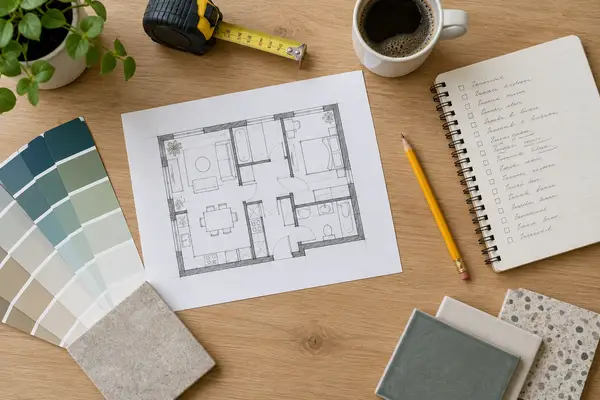
How to plan a renovation (and the right order of work)
Set the budget, then follow the order pros use: demolition, rough work, walls, ceiling, floors, finishes.
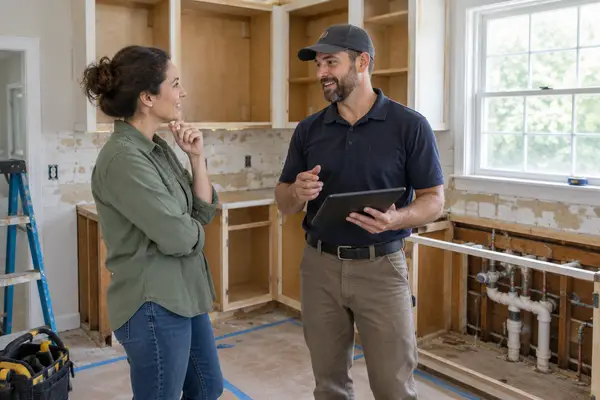
DIY or hire a pro? A job-by-job guide
A traffic-light table of common jobs — green for DIY, amber for "practice first", red for licensed pros.
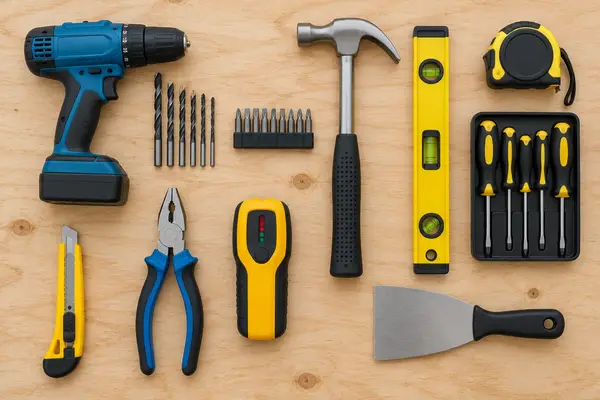
The beginner tool kit: 15 tools you actually need
The 15 tools that handle most home jobs, what to look for when buying, and what can wait.