Tools
The Beginner DIY Tool Kit: 15 Tools You Actually Need
A realistic starter tool kit for home repairs and renovation — 15 essential tools, what each one does, what to look for, and what to skip until you need it.
- Difficulty
- Beginner
- Cost
- $150–$350 total
Tool stores are designed to make you buy too much. The truth: a small, good-quality kit handles the vast majority of home repairs and decorating jobs. Buy these first, then add specialist tools only when a project needs them — or rent them.
The core 15
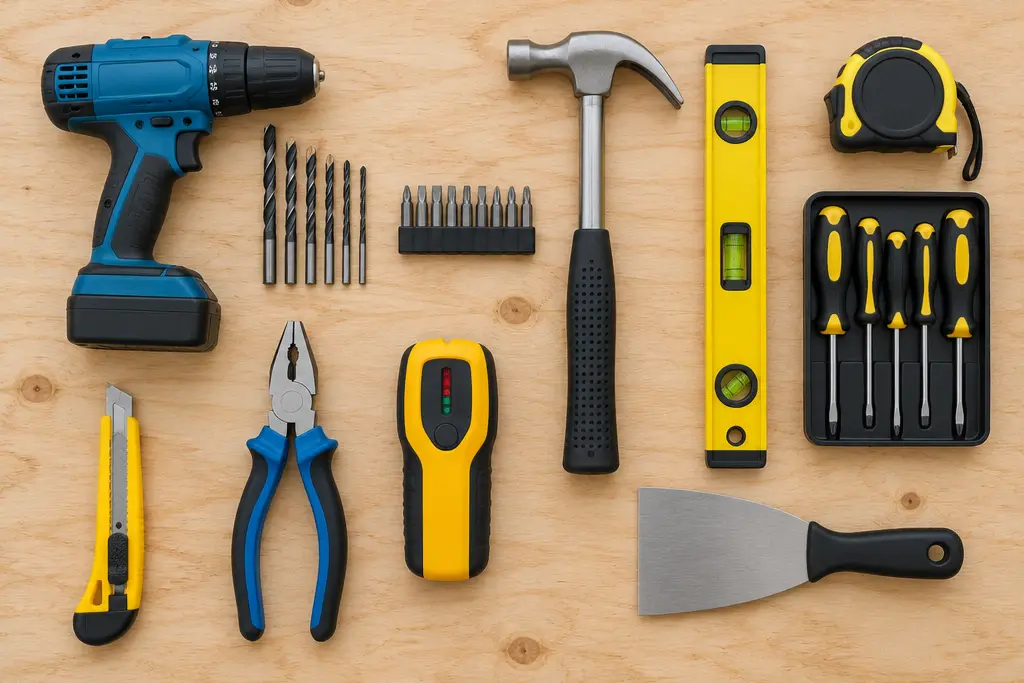
| # | Tool | Used for | What to look for |
|---|---|---|---|
| 1 | Cordless drill/driver | Drilling holes, driving screws, assembling furniture | 18V/20V class, two batteries, clutch settings, brushless if budget allows |
| 2 | Drill & driver bit set | Wood, metal and masonry holes; screw bits | Includes masonry bits and Phillips/Torx/square bits |
| 3 | Tape measure (25 ft / 8 m) | Everything | Wide, stiff blade; easy-to-read markings |
| 4 | Spirit level (24 in / 60 cm) | Shelves, pictures, tiles, cabinets | Aluminum body, 3 vials; plus a small torpedo level |
| 5 | Claw hammer (16 oz) | Nails, light demolition | Comfortable grip, not too heavy |
| 6 | Screwdriver set | Outlets, hinges, fixtures | Insulated handles; flat and Phillips in several sizes |
| 7 | Utility knife + spare blades | Drywall, carpet, caulk, packaging | Retractable, easy blade change |
| 8 | Pliers set | Gripping, bending, cutting wire | Slip-joint, needle-nose and diagonal cutters |
| 9 | Adjustable wrench | Plumbing nuts, bolts | 8–10 in with smooth adjustment |
| 10 | Stud finder | Finding studs and joists for heavy mounts | Edge-detection with AC wire warning |
| 11 | Putty knives (2 in and 6 in) | Patching, scraping | Flexible stainless blade |
| 12 | Caulk gun | Sealing tubs, sinks, trim gaps | Dripless, smooth rod |
| 13 | Non-contact voltage tester | Checking that power is really off | Audible + visual alarm — a must-have for safety |
| 14 | Step ladder | Ceilings, high shelves | Rated for your weight plus tools; wide steps |
| 15 | Safety kit | Glasses, dust masks, gloves, ear protection | See our safety guide |
Nice-to-have tools (buy when a project needs them)
- Jigsaw — curved and straight cuts in wood and laminate. Learn it in our power tools guide.
- Hammer drill or rotary hammer — for concrete and brick. A regular drill will struggle.
- Oscillating multi-tool — undercutting door jambs, cutting openings, scraping.
- Laser level — fast, accurate lines for tiling and shelf rows.
- Orbital sander — furniture flips and trim.
- Shop vacuum — dust control makes every job nicer.
Buying tips
- Stick to one battery platform. Batteries are the expensive part; staying with one brand lets you buy "bare" tools later at a lower price.
- Kits are often cheaper than a drill alone because they include batteries and a charger.
- Cheap hand tools are fine; cheap power tools and ladders are not. Spend where safety and accuracy matter.
- Keep everything in one box or bag, so every job starts in 30 seconds instead of a 20-minute search.
Not sure which drill to pick? See our cordless drill buying guide.
Keep reading
Beginner
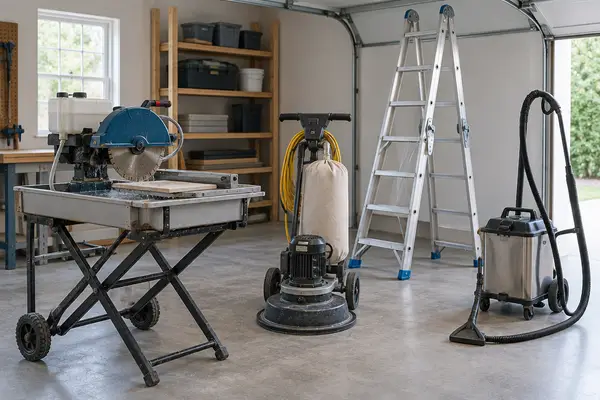
Buy or rent? Which tools to own
A simple rule of thumb, plus the heavy equipment you should almost always rent.
Beginner
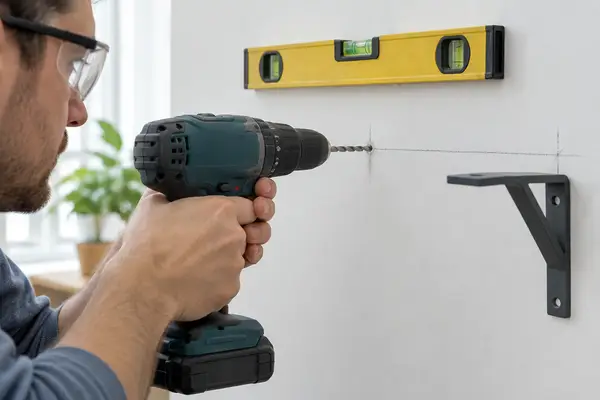
How to use a drill, hammer drill, jigsaw and level
Clutch settings, drilling into drywall, brick and tile, straight jigsaw cuts and reading a level.
Buying guide
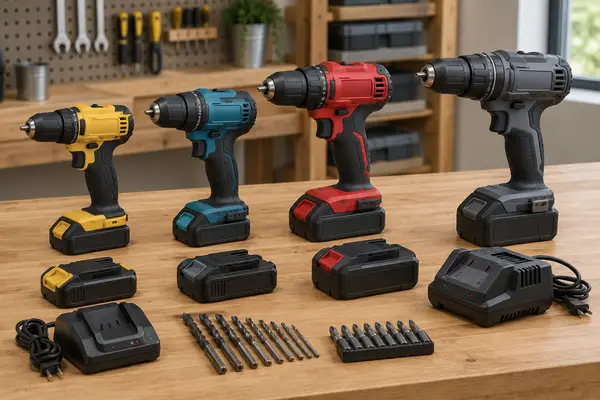
Best cordless drill for beginners: buying guide
12V or 18V? Brushless? Hammer drill or impact driver? What actually matters for home DIY.