Walls
How to Paint a Room Like a Pro: Step-by-Step for Beginners
The complete beginner method for painting a room: tools, prep, cutting in, rolling, two coats, and cleanup — for crisp lines and an even, streak-free finish.
- Difficulty
- Beginner
- Time
- 1–2 days
- Cost
- Low
What you need
- Paint (see our paint calculator) and primer if needed
- 9 in (23 cm) roller frame, 3/8 in (10 mm) nap covers, extension pole, tray
- 2–2.5 in (50–63 mm) angled sash brush
- Painter's tape, drop cloths, plastic sheeting
- Spackle, putty knife, sanding sponge
- Screwdriver (for outlet covers), step ladder, rags, bucket
Step 1: Prepare the room
- Move furniture to the middle and cover it. Cover the floor with drop cloths.
- Remove outlet and switch covers, curtain rods, pictures and nails you don't need.
- Fill holes and cracks, let dry, sand smooth. Patching guide.
- Wash dirty areas (kitchen, around switches) and let dry.
- Spot-prime all patches. Prime the whole wall if going from dark to light, over stains or on new drywall.
- Tape trim, windows and ceiling edges if you're not confident cutting in freehand.
Step 2: Paint the ceiling first
If the ceiling needs painting, do it before the walls — drips fall downward. See how to paint a ceiling.
Step 3: Cut in
"Cutting in" means brushing a 2–3 in (5–8 cm) band of paint along edges the roller can't reach: corners, ceiling line, trim, around outlets. Load the brush one-third deep, tap off excess, and pull a steady line. Cut in one wall at a time so the edge is still wet when you roll.
Step 4: Roll the walls
- Pour paint in the tray well, load the roller fully, roll off excess on the ramp.
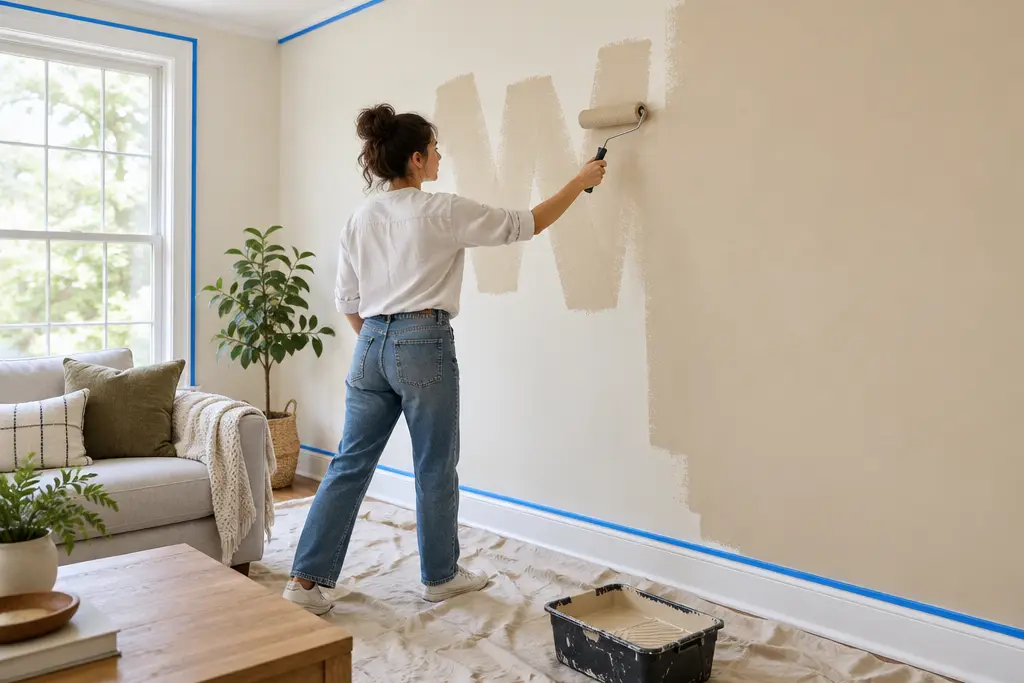
- Start about a foot from a corner. Roll a large "W" about 3 ft (1 m) wide and tall.
- Fill in the W without lifting the roller, working from top to bottom.
- Finish the section with light vertical strokes from ceiling to floor.
- Move to the next section, always rolling back into the wet edge.
Step 5: Second coat
Wait for the recoat time on the can (often 2–4 hours for latex paint). Repeat cutting in and rolling. Two coats give an even, durable color.
Step 6: Trim, cleanup and reassembly
- Remove tape while the last coat is slightly wet, at a 45° angle.
- Paint baseboards and trim last, with a semi-gloss for durability.
- Clean latex paint tools with warm soapy water; wrap them in plastic between coats instead of washing.
- Reinstall covers when the paint is dry. Keep a small jar of leftover paint for touch-ups.
Keep reading
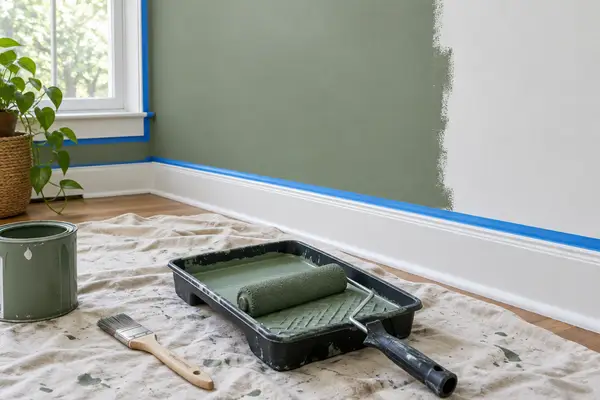
12 painting mistakes and how to fix them
Roller marks, bleeding tape lines and blotchy patches — causes and fixes.
Paint calculator
Gallons or liters of paint for walls and ceiling, including doors, windows and coats.
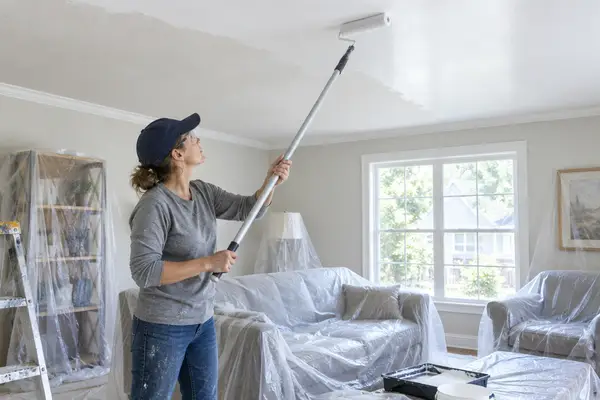
How to paint a ceiling (plus stretch & drywall options)
The right paint, the right roller direction, and alternatives: stretch and drywall ceilings.