Balcony & loggia
Balcony and Loggia Makeover: Flooring, Insulation and Cozy Ideas
Turn a balcony or enclosed loggia into usable space: deck tiles and outdoor flooring, waterproofing, insulating an enclosed loggia, lighting, furniture and plants.
- Difficulty
- Beginner–Intermediate
- Time
- 1 weekend–2 weeks
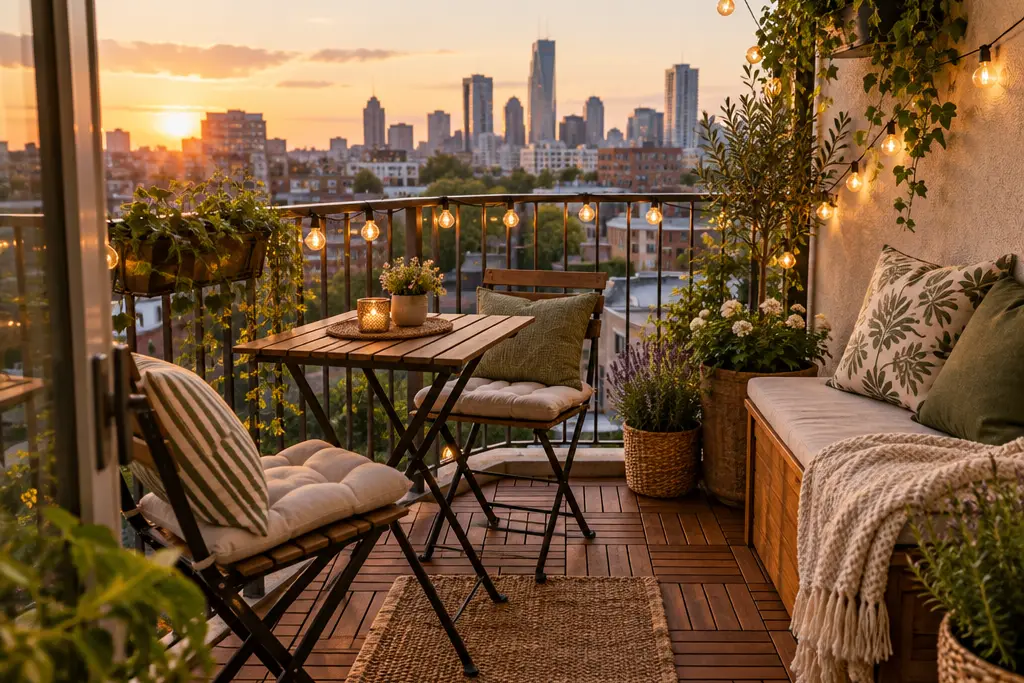
Even a tiny balcony can become your favorite room. The approach depends on whether it's open to the weather (a balcony) or enclosed with windows (often called a loggia or sunroom).
Open balcony: think weatherproof
Flooring
- Interlocking deck tiles (wood or composite) click together over the existing concrete — no tools, fully removable, ideal for renters.
- Outdoor porcelain pavers on adjustable pedestals give a premium, level finish and let water drain underneath.
- Outdoor rugs made of polypropylene add softness and dry fast.
Furniture and privacy
Folding bistro sets, wall-mounted drop-leaf tables and storage benches save space. Add privacy with bamboo screens or tall planters, and shade with a parasol or sail.
Lighting
Solar string lights and lanterns need no wiring. If you want permanent lighting or an outdoor outlet, use outdoor-rated, GFCI-protected fittings installed by an electrician.
Enclosed loggia: extend your living space
A glazed loggia can become a home office, reading nook or plant room. The steps:
- Check glazing. Single glazing makes insulation pointless — upgrade to insulated windows first.
- Seal gaps between frames and walls with low-expansion foam and weatherproof sealant.
- Insulate walls, floor and ceiling with rigid foam boards (e.g. XPS or PIR), taping the joints; add a vapor barrier on the warm side.
- Finish with moisture-resistant boards or paneling, then paint.
- Floor: insulation boards under a floating floor, or tile with electric underfloor heating mats.
- Heating and electrics — a new circuit or outlets must be done by an electrician; in many buildings, extending radiators to a loggia isn't allowed.
Plants that thrive
Match plants to the sun: herbs, geraniums and succulents for full sun; ferns, ivy and hostas for shade. Use pots with drainage and saucers so you don't drip onto the neighbors below.
Keep reading
Kitchen renovation guide
Layout, order of work, budget-friendly upgrades and which jobs to hand to pros.
Bathroom & toilet renovation guide
Waterproofing, ventilation, tile and fixtures — in the right order, with clear DIY vs pro advice.

Bedroom & living room makeover
The easiest rooms for a first DIY project: walls, floors, lighting and cozy details.