Doors & windows
How to Fix a Sticking or Sagging Door (Plus Window Tweaks)
Fix doors that stick, rub or won’t latch — tighten hinges, use longer screws, adjust the strike plate, plane the edge — plus quick adjustments for modern windows.
- Difficulty
- Beginner
- Time
- 15–60 minutes
- Cost
- Very low
Most sticking doors aren't warped — the hinges have simply loosened and the door has sagged. Try these fixes in order, from easiest to hardest.
1. Find where it rubs
Close the door slowly and look for the gap: a gap along the top on the handle side and rubbing at the bottom usually means sagging. Rub chalk or a pencil along the door edge, close it, and see where the marks transfer.
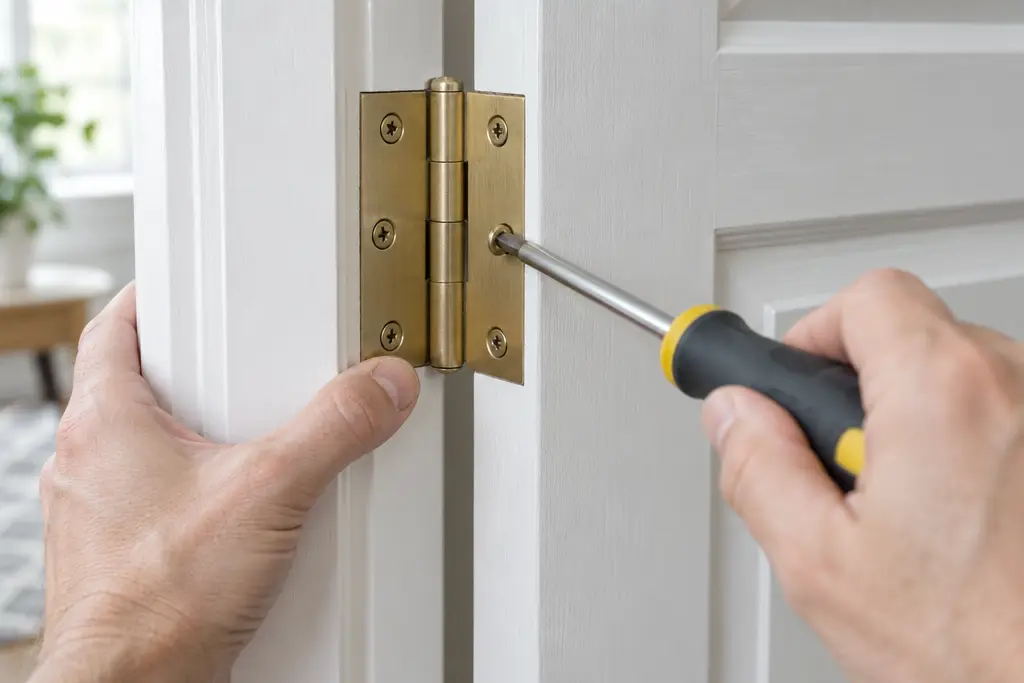
2. Tighten the hinge screws
Open the door and tighten every hinge screw on both the door and the frame. Often that's the entire fix.
3. Replace a short screw with a long one
If a screw spins without tightening, or the door still sags, replace one screw in the top hinge (frame side) with a 3 in (75 mm) screw that reaches the wall stud. This pulls the top of the door back towards the frame.
Stripped holes can also be fixed by gluing in wooden matchsticks or golf tees, trimming flush and re-driving the screw.
4. Adjust the strike plate
If the door closes but won't latch, the latch and strike plate don't line up. Enlarge the strike plate opening slightly with a file, or move the plate up or down. Adjustable strike plates make this easy.
5. Shim a hinge
A thin cardboard shim behind a hinge leaf moves the door edge away from the frame on that side. Behind the bottom hinge, it tilts the door up at the latch side.
6. Plane or sand the edge (last resort)
If the door has swollen with humidity, wait for a dry season first — it may shrink back. If not, mark the rubbing area, remove the door, and plane or sand. Seal and paint the bare edge afterwards, or it will absorb moisture and swell again.
Quick fixes for windows
- Tilt-and-turn and modern casement windows often have adjustable hinges and locking cams (eccentric rollers on the sash edge). Turning the cams increases or decreases seal pressure — tighter for winter, looser for summer. Check the manufacturer's guide for your hardware.
- Sticky sliding windows: vacuum the tracks and apply a silicone lubricant (not oil, which attracts dirt).
- Drafts: replace worn weatherstripping; it's usually a push-in rubber profile.
- Window returns (reveals): gaps around new windows are finished with foam, then plaster, drywall or PVC trim, and sealed with paintable caulk.
Keep reading
How to paint a room like a pro
Prep, cut in, roll, repeat — the full method for crisp lines and no streaks.
How to skim coat a wall
Turn rough, patchy walls into smooth ones with thin coats of compound.
How to patch drywall (small to large holes)
Nail holes, doorknob dents and big holes — three methods and how to make them invisible.