Materials
Types of Tile Explained: Ceramic, Porcelain, Stone, Mosaic and More
Ceramic vs porcelain, natural stone, cement, glass and mosaic tiles compared — where to use each, pros and cons, and how to calculate how many you need.
- Difficulty
- Beginner
Tile is one of the most durable finishes you can put in a home — but only if you choose the right type for the room. Here is what beginners need to know.
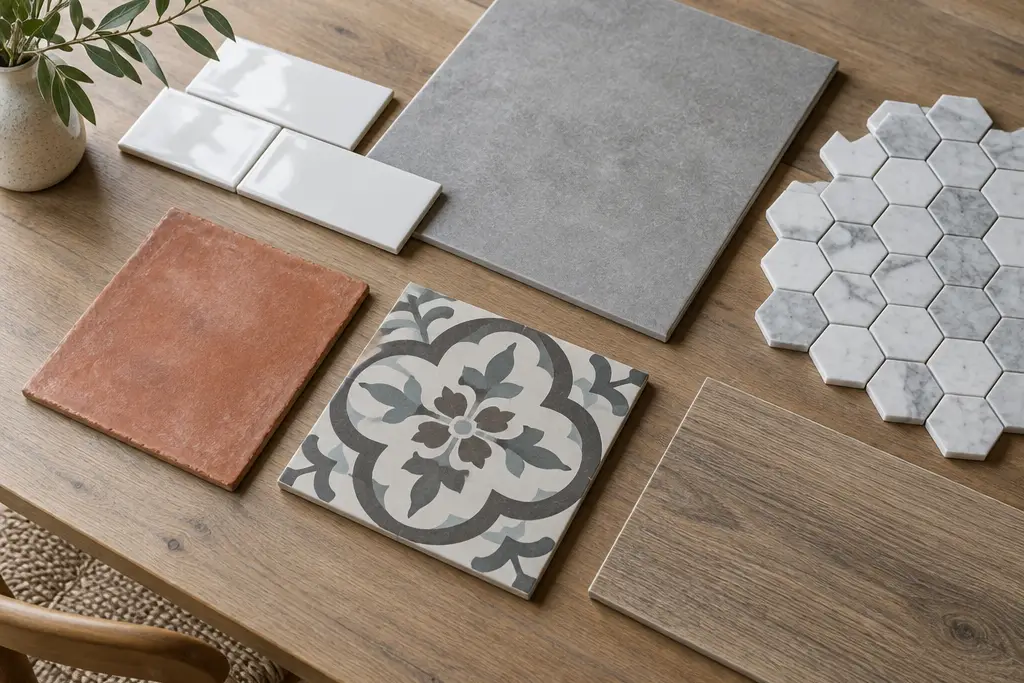
Ceramic tile
Made from clay fired at a lower temperature and covered with a glaze. Lighter and softer than porcelain, so it's easier to cut by hand.
Pros
- Affordable
- Huge choice of colors
- Easy to cut — beginner friendly
Cons
- More porous body
- Chips show the clay color underneath
- Not for outdoor freezing climates
Best for: bathroom and kitchen walls, backsplashes, low-traffic floors.
Porcelain tile
A denser type of ceramic fired at higher temperature. Water absorption is very low (under 0.5%), which makes it strong and frost resistant. Many porcelain tiles are "through-body", so chips are barely visible.
Pros
- Very hard-wearing
- Great for floors, showers and outdoors
- Convincing wood and stone looks
Cons
- Harder to cut — use a wet saw or quality cutter
- Heavier; large formats need a flat subfloor
- Needs a polymer-modified adhesive
Best for: floors everywhere, showers, entryways, patios.
Natural stone
Marble, travertine, slate, limestone, granite. Every tile is unique. Most stones are porous and need sealing; marble etches with acids like lemon juice or harsh cleaners.
Best for: feature walls, luxury bathrooms — if you accept the maintenance.
Cement (encaustic) tile
Colorful patterned tiles made from pigmented cement. Beautiful, but porous — they must be sealed and resealed. Porcelain "cement-look" tiles are an easier alternative.
Mosaic and glass tile
Small pieces mounted on a mesh sheet. Great for shower floors (the many grout lines give grip) and backsplashes. Glass tiles need a white, non-sanded-grout-friendly adhesive and careful cutting.
Terracotta and quarry tile
Unglazed, warm-colored clay. Rustic and beautiful but porous — needs sealing. Great in farmhouse kitchens and cottages.
Tile sizes and what they mean for DIY
| Size | DIY difficulty | Notes |
|---|---|---|
| Mosaic sheets | Easy–medium | Forgiving on uneven floors; lots of grout |
| 4×4 to 12×12 in (10–30 cm) | Easiest | Best for first projects |
| Subway 3×6 in (7.5×15 cm) | Easy | Classic backsplash |
| 12×24 in (30×60 cm) | Medium | Use a 1/3 offset, not 1/2, to avoid "lippage" |
| 24×48 in (60×120 cm) and larger | Hard | Needs leveling clips, very flat floor, two people |
Ratings to check on the box
- PEI rating (0–5) — wear resistance of glazed tile. PEI 3+ for most residential floors.
- Slip resistance (DCOF or R-rating) — higher numbers are safer for bathroom and outdoor floors.
- Water absorption — under 0.5% means porcelain; required for outdoor use in cold climates.
Buy about 10% extra (15% for diagonal layouts) from the same batch. Use our tile calculator to get the exact count.
Keep reading
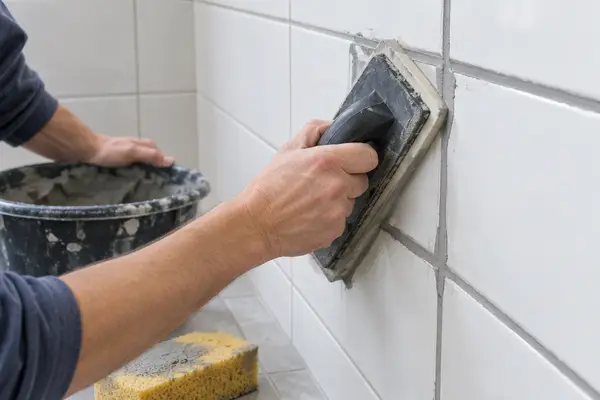
How to regrout tile
Remove cracked, moldy grout and replace it — the cheapest way to make tile look new.
Tile calculator
Tiles and boxes for any floor or wall, with the right waste factor for your layout.
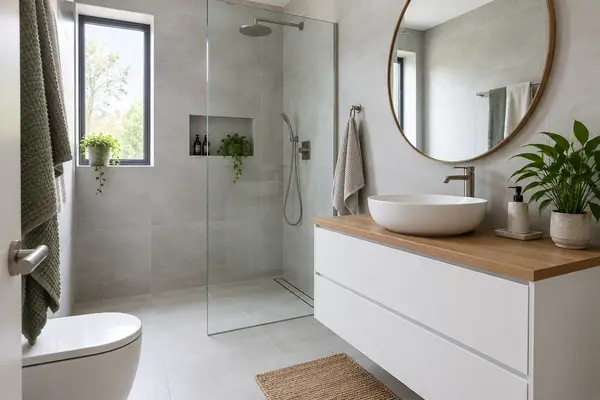
Bathroom & toilet renovation guide
Waterproofing, ventilation, tile and fixtures — in the right order, with clear DIY vs pro advice.